
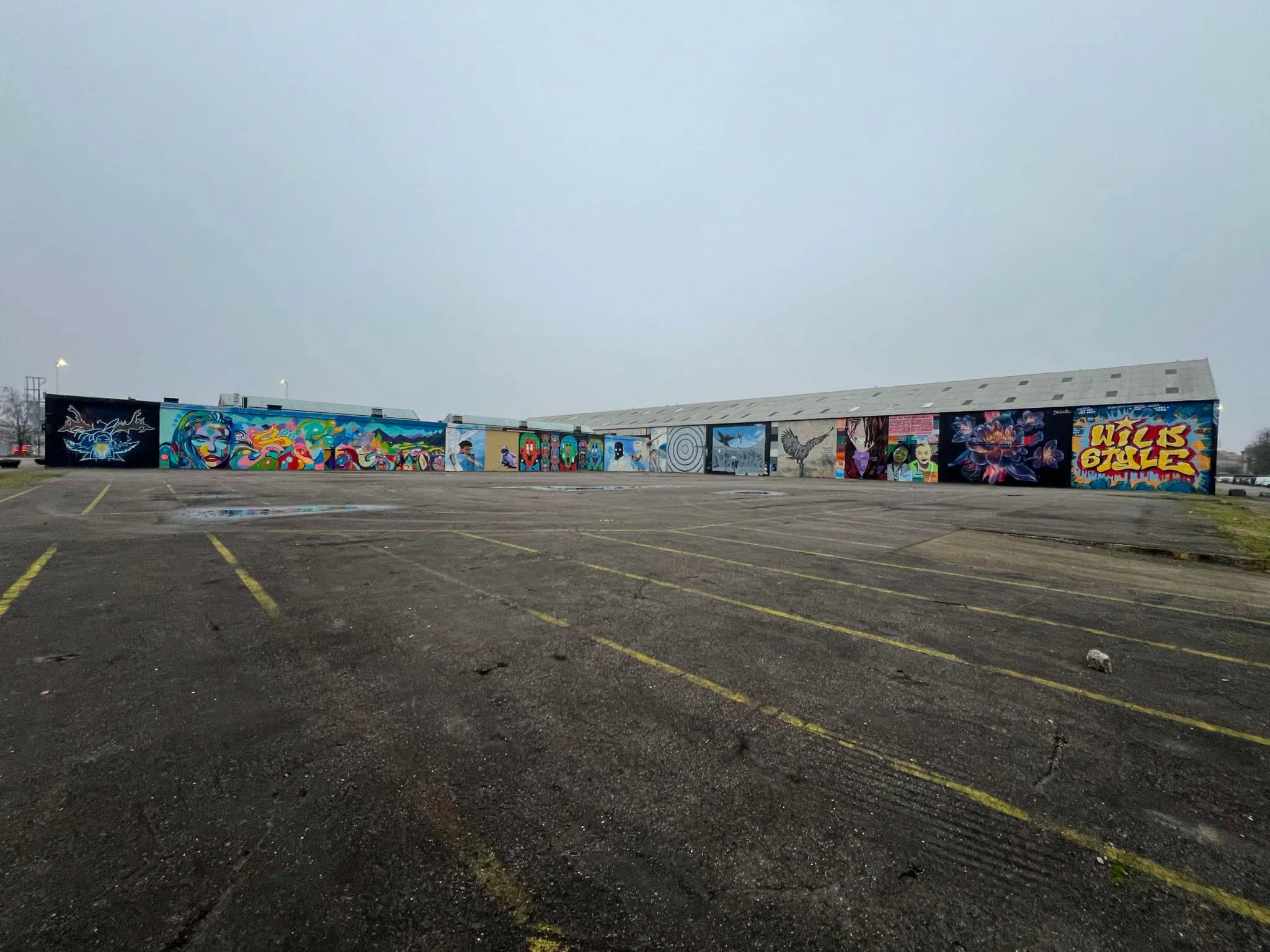
For 15 years, something rare has existed in the Kampen district of Malmö. An artistic ecosystem. A free zone. A living laboratory.
In what is widely known as the Graffiti Hangar, graffiti writers, urban artists, established professionals and cultural practitioners from vastly different fields have worked side by side — experimenting, exhibiting and pushing artistic expression forward without filters, without compromise, and without fear.
This space has become more than walls and a roof. It represents Malmö’s courage. Malmö’s edge. Malmö’s belief that art should not be tamed.
 What has grown here has no real equivalent — not locally, not nationally, and not even internationally in its particular form. It is a place where artistic freedom is not a slogan but a daily practice. And now, it is under threat.
Just before Christmas 2025, the property owner informed the organization that operations must cease immediately and the keys be returned. The alternative: financial penalties, changed locks, forced removal of materials, art and equipment. This despite ongoing public reporting about a pending change of ownership.
For years, the same property owner expressed support and even shared visions of building an urban art hall on the site alongside housing. We believed we were collaborating with one of the most forward-thinking property owners in the country.  Today, that belief is being tested.
Why This Space Matters
The Graffiti Hangar — and the broader vision of Urbankonsthallen — is not simply about graffiti.
It is about:
1. An International Spearhead for Urban Art
A place where graffiti and street art maintain a strong global connection. Artists from across borders meet here. Ideas travel from Malmö to the world and back again.
2. A Platform for the Next Generation
Through UNG – Urbankonsthall, supported by the Swedish Inheritance Fund, young creators have developed ambitious, high-quality cultural projects. Here, the art we do not yet recognize is born. Here, future culture takes shape.
3. A Rare Experimental Space
Professional and emerging artists alike have had the opportunity to create research-based, challenging and forward-looking exhibitions and processes that do not exist elsewhere in Malmö, Skåne, Sweden — or even the Nordic region.
Hundreds of artists and cultural workers have received paid assignments here. Thousands of young people have exhibited, participated in workshops and developed projects. Tens of thousands have visited. Everyone has been welcome.
This is not marginal activity. It is infrastructure for artistic freedom.
 A Question of Identity

Is it Malmö spirit to close the doors on a space that has proven its value year after year? Is it Malmö spirit to silence an initiative that has thrived despite limited local structural support — driven by energy, necessity and belief?
Free artistic spaces are not luxuries. They are foundations of democratic culture. They are places where quality is defined by artists themselves — at arm’s length from bureaucracy, politics and commercial pressure. We are now asking the current property owner, the politicians of Malmö and the Cultural Administration to take this matter seriously. To recognize that a city claiming to support culture must also protect its independent spaces.
A Call for Solidarity
We are gathering voices from artists, organizations, institutions and cultural actors — locally and internationally — who understand the importance of free, artist-led spaces. We ask you to stand with us. Sign with your name and your organization. Share this message. Help us demonstrate that Kampen matters — not only to Malmö, but to a wider artistic community.
Artistic freedom needs physical space. And once a space like this disappears, it is almost impossible to rebuild. Let us not lose something we know is extraordinary.
With solidarity,
/Pärra